


WHAT YOU NEED TO KNOW
- The laser is applied externally and acts through the sclera.
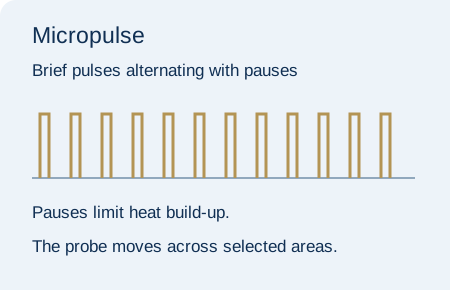
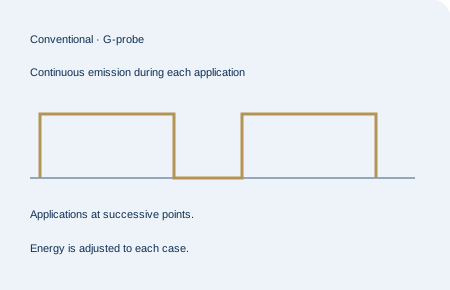
- Emission can be micropulsed or continuous, using a G-probe.
- The response and need to repeat treatment vary between patients.
Cyclophotocoagulation is a laser treatment to lower intraocular pressure. Energy is applied through a probe placed on the eye and passes through the sclera — the white wall of the eyeball — to the ciliary body behind the iris.

Two ways of delivering energy
When may it be useful?
It may be considered when pressure is not sufficiently controlled, medication is difficult to tolerate, other operations have failed or carry high risks. Conventional treatment is often used in difficult-to-control glaucoma and painful eyes with limited visual potential. Micropulse treatment may also be considered in eyes with useful vision. The choice depends on the type and severity of glaucoma and individual assessment.
Results and limitations
Both methods can lower pressure, but the response varies and may decline over time. Repeated laser, continued eye drops or another operation may be needed. Comparative studies found fewer complications with micropulse than with conventional treatment; this does not mean it is risk-free. Neither restores vision already lost to glaucoma.
What happens and what care is needed?
It is usually performed as an outpatient procedure, with anaesthesia chosen to ensure comfort. Eye drops are then prescribed to control inflammation, with follow-up appointments to monitor pressure. Do not change your usual treatment without advice from the team.
Pain, redness, inflammation and blurred vision may occur. Less common complications include macular oedema, excessively low pressure and reduced vision; the most severe cases may involve atrophy of the eye, particularly with conventional treatment. Severe pain or a marked reduction in vision requires urgent contact with the team.
The aim is to control pressure and preserve existing vision. Glaucoma follow-up continues even when treatment is successful.
Clinical references
Before deciding, discuss these points at your appointment
- Indication
- What is the purpose of the procedure in my case?
- Alternatives
- What other options may be appropriate for my eyes?
- Recovery
- What care and follow-up will I need?
- Benefits and limitations
- What result can I expect, and what risks should I consider?
Dr. Nuno Lopes · Patient information
Editorial presentation updated on 27 October 2026. Your team's individual instructions take priority.