Glaucoma
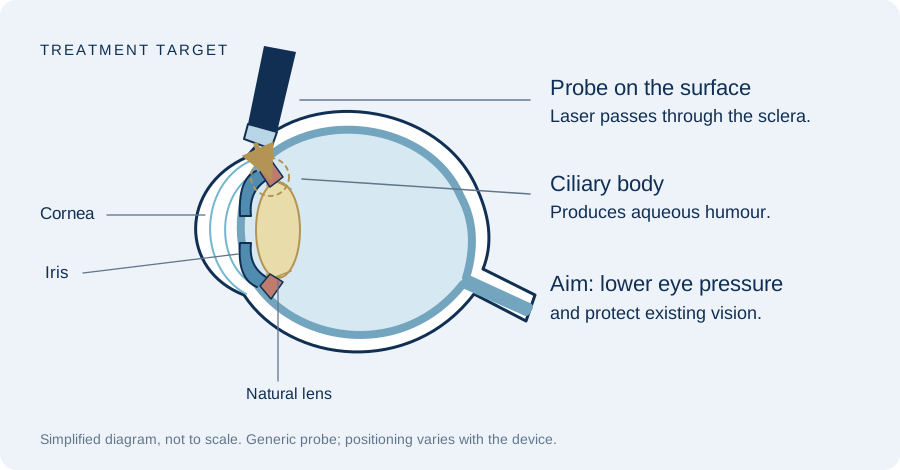
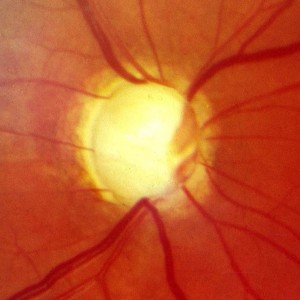
Glaucoma is currently one of the world's leading causes of irreversible blindness.
Read article ↗
Surgery · 3 MIN READ
WHAT YOU NEED TO KNOW
Trabeculectomy creates a new drainage route for aqueous humour to reduce intraocular pressure. A flap made from the eye's own tissue helps control this outflow.
In my practice I use a variation very similar to the Moorfields Safer Surgeryapproach. The scleral flap, suture-based flow control and broad distribution of fluid beneath the conjunctiva are important principles of this approach.
Follow the main stages. You can play the animation, pause it or select a stage to explore at your own pace.
After surgery, pressure and healing are monitored at appointments. Flap sutures may need adjustment or release according to the progress of each eye. Technique and treatment details are individualised.
The aim is to preserve existing vision. Medication or additional treatments may still be necessary.
For those who would like to see surgical footage of the procedure:
 Watch video on YouTube ↗Original video in Portuguese
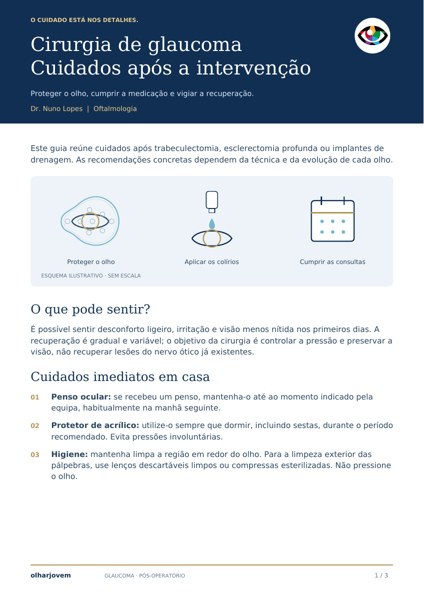
PATIENT GUIDE
Protection, medication and follow-up after trabeculectomy, deep sclerectomy or drainage implants.
This information does not replace an individual medical assessment. Follow the advice of the team looking after you.
Dr. Nuno Lopes · Patient information
Editorial presentation updated on 27 October 2026. Your team's individual instructions take priority.
CONTINUE READING