


Glaucoma
Glaucoma is currently one of the world's leading causes of irreversible blindness.
Read article ↗
Questions and Guidance · 1 MIN READ
WHAT YOU NEED TO KNOW
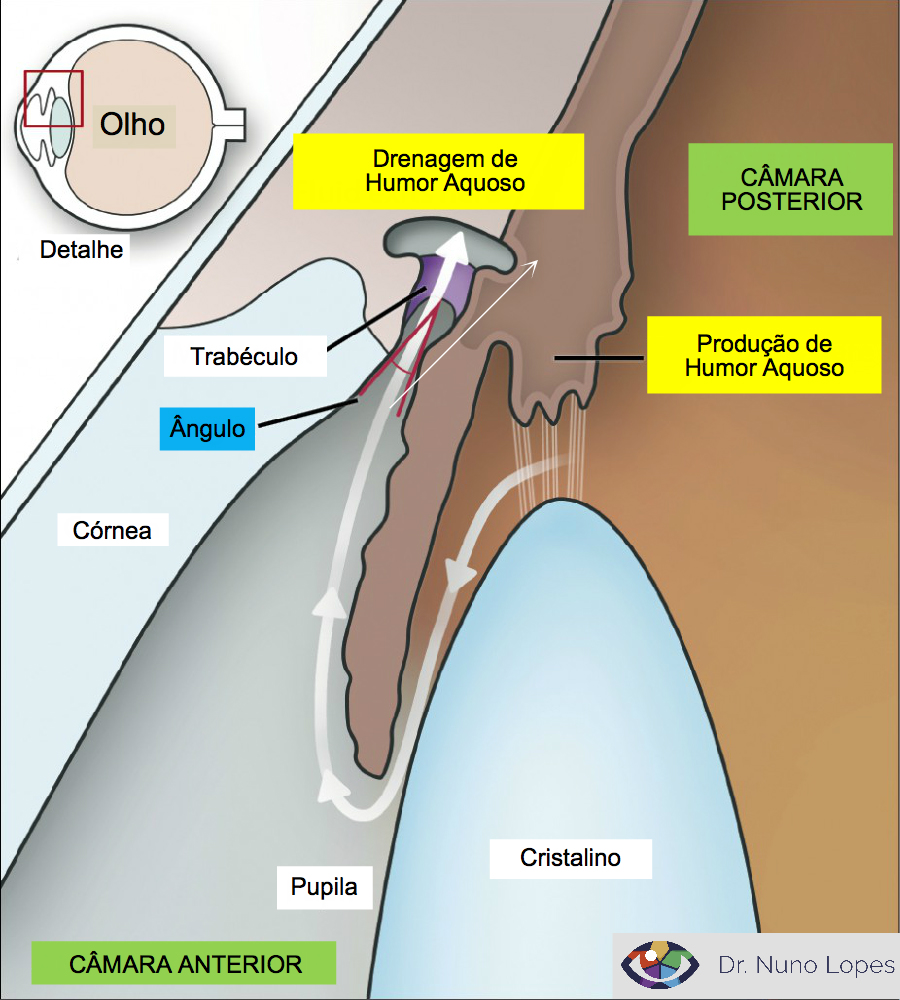
Glaucoma is a progressive optic neuropathy that produces characteristic anatomical changes in the optic nerve and corresponding loss of visual field sensitivity.
The main risk factor for its development is ocular hypertension, although normal-tension glaucoma also occurs.
Intraocular pressure reflects the balance between production and drainage of aqueous humour. As its production rate is reasonably stable, ocular hypertension usually results from insufficient drainage.
The main outflow route for aqueous humour is through the trabecular meshwork at the angle where the iris inserts into the corneoscleral region.
It is called open-angle glaucoma when access to the angle appears unobstructed, and narrow-angle or angle-closure glaucoma when obstacles prevent aqueous humour from adequately reaching the trabecular meshwork.
Open-angle glaucoma is much more common than narrow-angle glaucoma. The latter, however, is generally more destructive and, despite being less common, accounts for almost 50% of glaucoma blindness.
Angle assessment is essential when glaucoma is suspected or diagnosed.
The best method of assessment is usually gonioscopy.
Additional tests such as optical coherence tomography (OCT) and ultrasound biomicroscopy (UBM) are also useful for this assessment.
This information does not replace an individual medical assessment. Follow the advice of the team looking after you.
Dr. Nuno Lopes · Patient information
Editorial presentation updated on 27 October 2026. Your team's individual instructions take priority.
CONTINUE READING
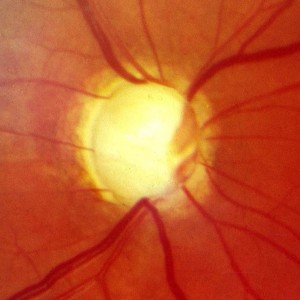
Glaucoma is currently one of the world's leading causes of irreversible blindness.
Read article ↗
Learn about safer trabeculectomy and explore an animation of drainage controlled by a scleral flap, following an approach similar to Moorfields Safer Surgery.
Read article ↗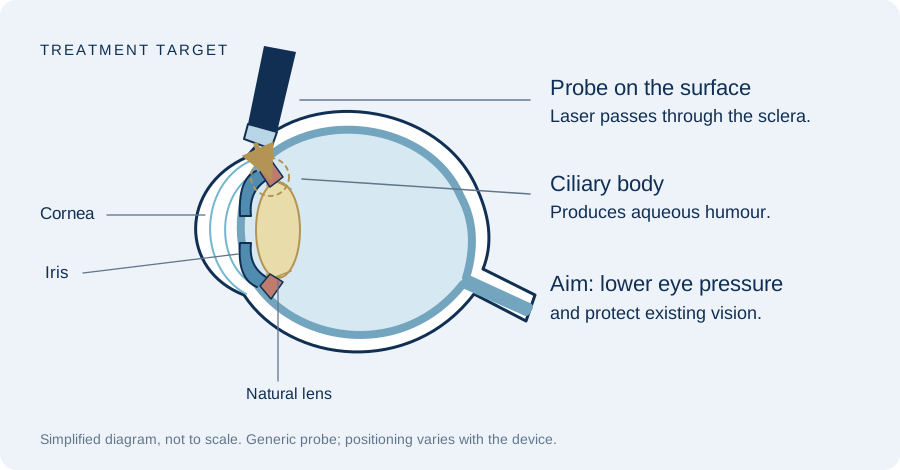
Micropulse and conventional G-probe laser: how they work, when they are considered and what to expect during recovery.
Read article ↗