


Glaucoma
Glaucoma is currently one of the world's leading causes of irreversible blindness.
Read article ↗
Surgery · 3 MIN READ
WHAT YOU NEED TO KNOW
In some cases of glaucoma, a new outflow route must be created for aqueous humour, the fluid circulating inside the eye. Drainage implants help lower intraocular pressure by directing this fluid to the tissues beneath the conjunctiva, where it is absorbed.
In my practice, I use the PRESERFLO MicroShunt and the posterior drainage devices Ahmed FP7, PAUL and Ahmed ClearPath. The choice depends on the eye's characteristics and each person's treatment plan.
Choose one of the four implants and press Play. You can pause the animation or explore each step at your own pace.
It is a microtube connecting the anterior chamber to the space beneath the conjunctiva. It does not have the plate used in posterior drainage devices. Drainage takes place into a filtration area beneath the tissues covering the eye's surface.
The Ahmed FP7, PAUL and ClearPath use a tube connected to a plate. The plate sits on the eye's outer surface, further back and covered by conjunctiva; the tube connects it to the inside of the eye. “Posterior” refers to the position of the plate and does not mean fluid is directed towards the retina.
Initial drainage may require flow-control measures adapted to the device and eye. The animation illustrates the fluid's path, not every technical step of the operation.
The aim is to control intraocular pressure and help preserve existing vision. Surgery does not restore vision already lost to glaucoma. Postoperative follow-up is essential, and medication or treatment adjustments may still be necessary.
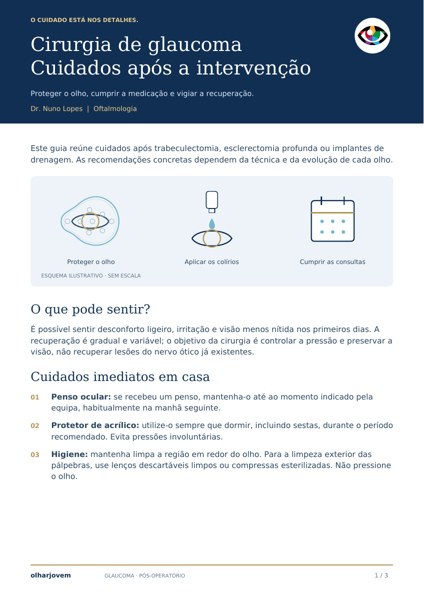
PATIENT GUIDE
Protection, medication and follow-up after trabeculectomy, deep sclerectomy or drainage implants.
This information does not replace an individual medical assessment. Follow the advice of the team looking after you.
Dr. Nuno Lopes · Patient information
Editorial presentation updated on 27 October 2026. Your team's individual instructions take priority.
CONTINUE READING
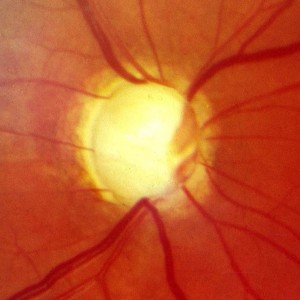
Glaucoma is currently one of the world's leading causes of irreversible blindness.
Read article ↗
Learn about safer trabeculectomy and explore an animation of drainage controlled by a scleral flap, following an approach similar to Moorfields Safer Surgery.
Read article ↗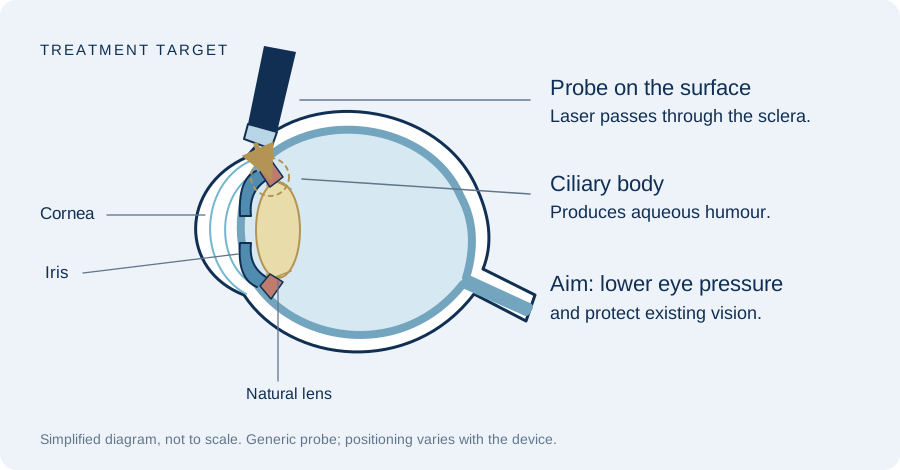
Micropulse and conventional G-probe laser: how they work, when they are considered and what to expect during recovery.
Read article ↗