


Dry eye
Dry eye occurs when tears are insufficient or of poor quality to protect the surface of the eye.
Read article ↗
Eye conditions · 3 MIN READ
WHAT YOU NEED TO KNOW
Pinguecula and pterygium are very common in people who spend a lot of time outdoors. They are not cancer and are not contagious. Most of the time they only cause irritation and a cosmetic change, but a pterygium can grow and should therefore be monitored.
SEEN FROM THE FRONT
Pinguecula and pterygium
Both appear on the conjunctiva, almost always on the side nearest the nose.
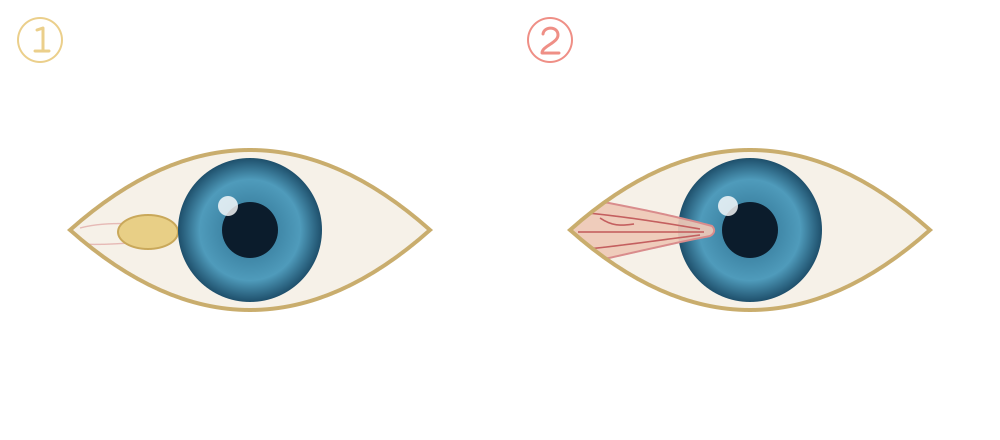
A yellowish thickening of the conjunctiva. It stays off the cornea and does not affect vision.
Tissue with blood vessels that grows onto the cornea. It can cause astigmatism and, if it advances, block vision.
CLINICAL PHOTOS
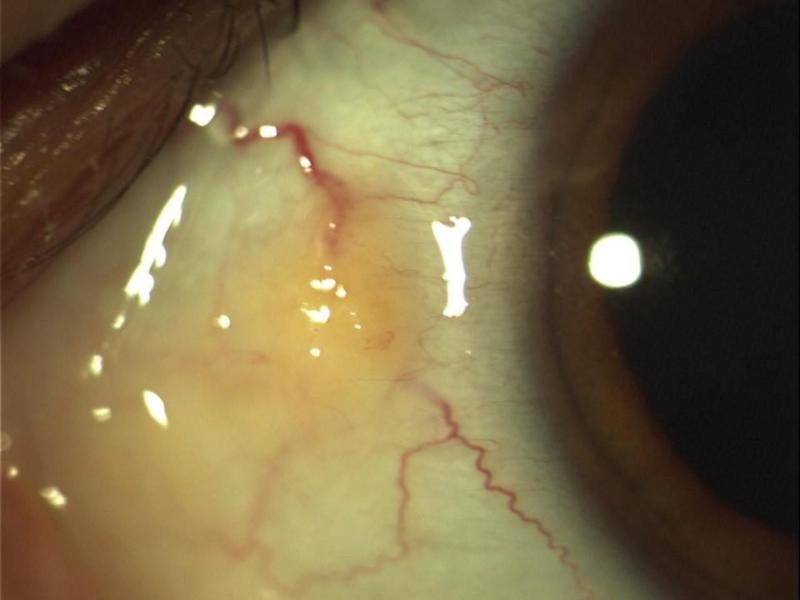
Pinguecula: a yellowish thickening of the conjunctiva next to the cornea.
Photo: Red eye2008 · CC BY-SA 3.0 · Wikimedia Commons
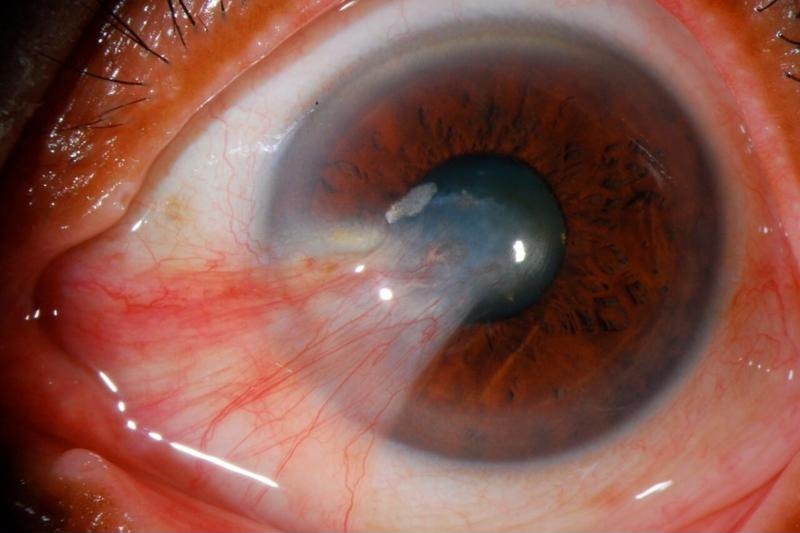
Pterygium: tissue with blood vessels spreading from the conjunctiva onto the cornea.
Photo: José Miguel Varas, MD · CC BY 3.0 · Wikimedia Commons
A pinguecula is a small yellowish thickening of the conjunctiva next to the cornea, most often on the side nearest the nose. It does not grow onto the cornea. A pterygium is a fold of tissue with blood vessels, shaped like a triangle or a wing, that spreads from the conjunctiva onto the cornea. It sometimes starts from a pinguecula.
The main factor is ultraviolet radiation from the sun. Wind, dust, dry air and heat also contribute. They are more common in people who work or play sport outdoors, such as farmers, fishermen, surfers or sailors, and in sunny climates.
In most cases, protecting the eyes and relieving symptoms with artificial tears is enough. During flare-ups, your ophthalmologist may prescribe anti-inflammatory drops for a short time. These treatments relieve symptoms but do not make the lesion disappear.
Surgery is considered when a pterygium grows towards the centre of the cornea, causes astigmatism or reduced vision, causes persistent irritation despite treatment, limits eye movement or is cosmetically bothersome. A pinguecula rarely needs surgery.
It is done under local anaesthesia as day surgery. The pterygium is removed and the area is covered with a small graft of conjunctiva from the same eye, fixed with tissue glue or stitches. This technique greatly reduces the risk of the pterygium growing back. A gritty feeling and a red eye are normal in the first days; redness can last a few weeks.
Have it examined if the lesion grows, changes colour, bleeds or looks different from usual. Other conjunctival lesions can look similar and should be assessed.
This information does not replace an individual medical assessment. Follow the advice of the team looking after you.
Clinical responsibility: Dr. Nuno Lopes · Ophthalmology
Page update:
This date refers to the page presentation and organisation.
Clinical review: Dr. Nuno Lopes ·
CONTINUE READING
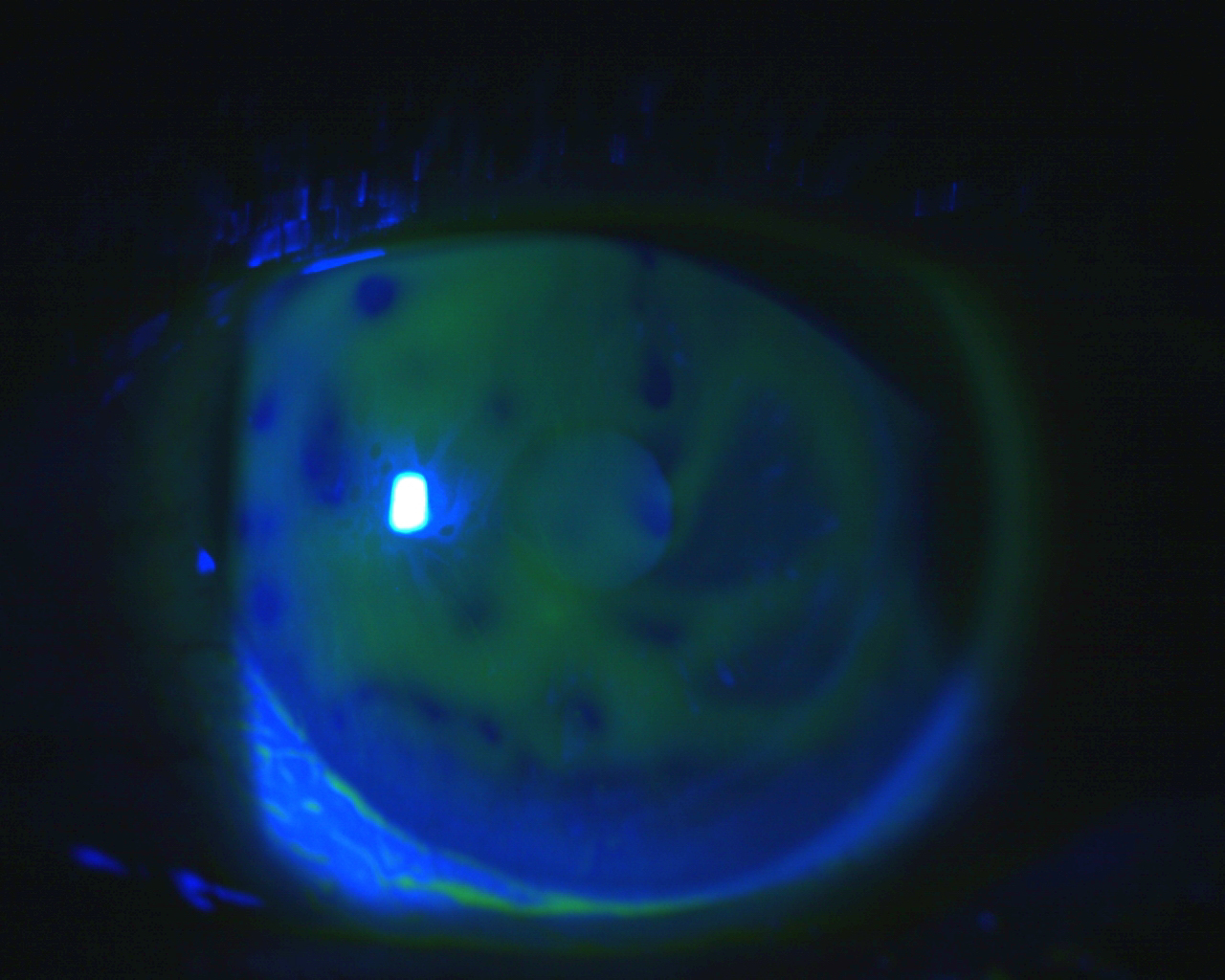
Dry eye occurs when tears are insufficient or of poor quality to protect the surface of the eye.
Read article ↗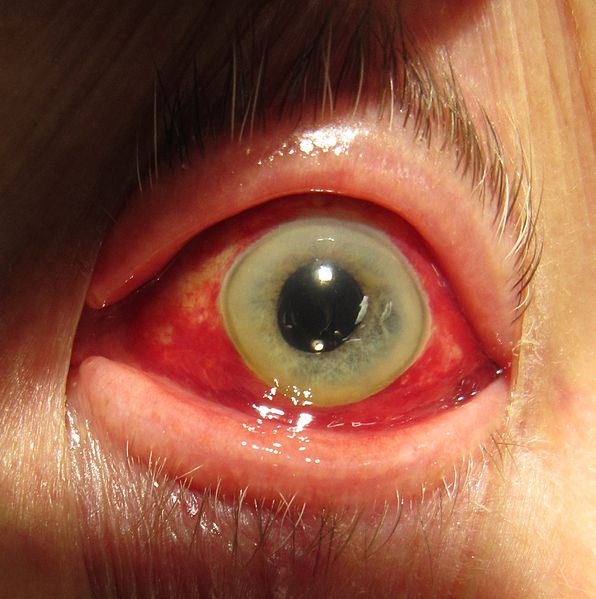
Red eye has many causes, almost always benign, such as conjunctivitis.
Read article ↗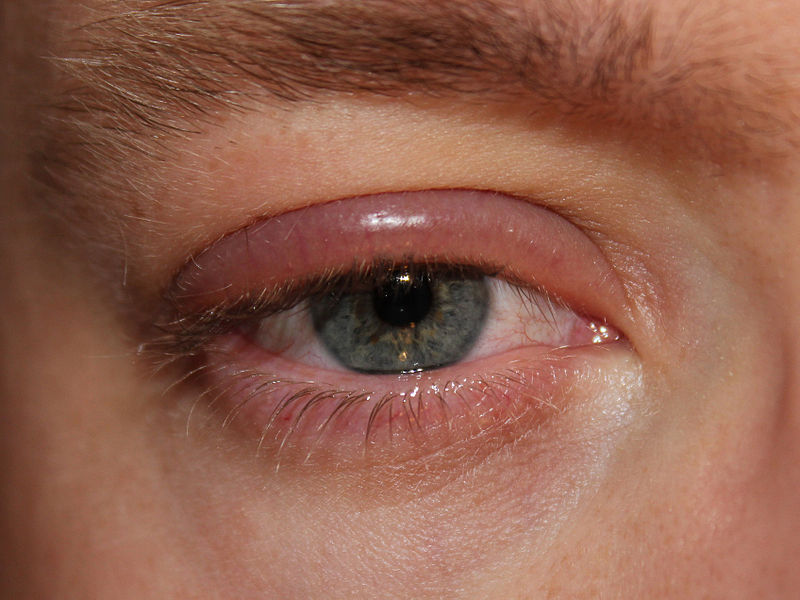
Blepharitis is a very common, often chronic inflammation of the eyelids.
Read article ↗